






















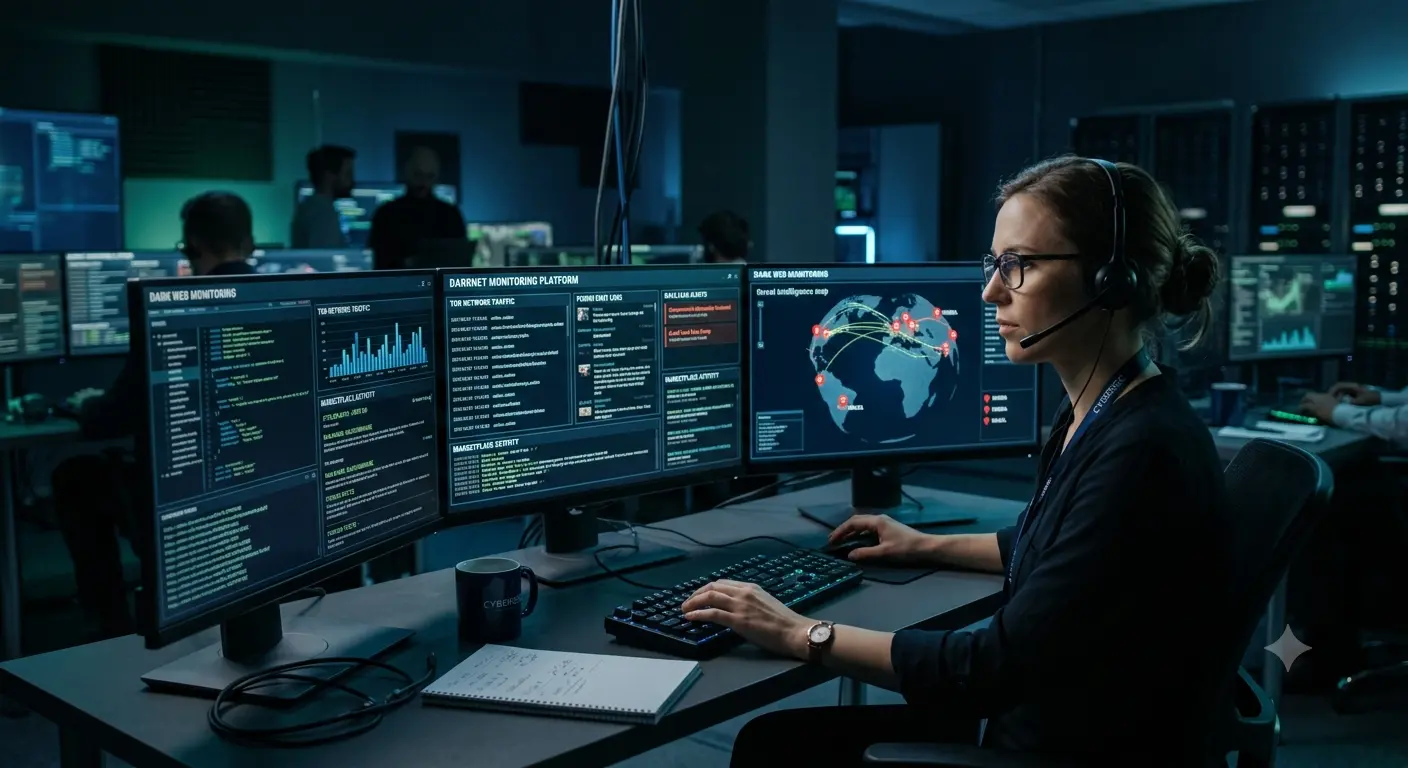
For many business owners, the dark web still sounds like a distant cybercrime marketplace that only matters after a major breach has already happened. That assumption is dangerous. In 2026, the dark web is not just where stolen data appears after an incident. It is often where the warning signs of the next incident can be found, including compromised employee credentials, infostealer logs, leaked session cookies, exposed customer data, access to internal systems, and discussions that may signal an upcoming attack.
The most serious risk is not simply that a company’s information may appear in hidden forums, Telegram groups, breach dumps, or underground marketplaces. The greater risk is that the company may have no idea the exposure exists while attackers are already evaluating how to use it. A single exposed employee account can provide access to email, cloud storage, CRM systems, finance tools, developer platforms, or admin portals. When that access is discovered by criminals before it is discovered by the business, the organization loses the chance to contain the threat early.
This is why professional dark web monitoring has become an essential part of modern breach prevention. It gives businesses visibility into places where stolen data, leaked credentials, and compromised access are traded, discussed, or repackaged for future attacks. Without that visibility, a company may only discover the problem after a fraudulent wire transfer, a ransomware demand, a customer data leak, or an unauthorized login that has already expanded into a larger breach.
The danger is especially severe because modern attacks often begin outside the corporate perimeter. An employee may unknowingly use a compromised device, log into a work account from an unmanaged laptop, save passwords in a browser, or install software that contains infostealer malware. Once infected, the device can expose corporate credentials, cookies, SaaS sessions, and other sensitive access data, even if the company’s internal network remains untouched. That information can later surface in dark web channels, private criminal communities, or data packs sold to other attackers.
At that point, the attacker does not need to break through the front door. They may already have the keys. Valid credentials and stolen sessions are valuable because they can make malicious activity look like normal employee behavior. An attacker who logs in with real access can study internal systems, read sensitive messages, download documents, identify privileged accounts, and prepare a more damaging operation. This is why the line between “employee credential exposure” and “major breach” can be much thinner than many companies realize.
Dark web monitoring helps close that gap by turning hidden external exposure into an actionable business signal. Instead of waiting for a breach to become visible inside the organization, companies can detect whether their domains, employees, credentials, cookies, assets, or sensitive data are already appearing in criminal ecosystems. The value is not only in finding the data, but in understanding the context around it: where it appeared, how recent it is, whether it came from infostealer malware, whether it includes session data, whether the exposed user has privileged access, and what response should happen next.
For ransomware prevention, this kind of visibility is particularly important. Ransomware groups and their affiliates often look for the easiest path into a company, and stolen credentials are one of the most efficient paths available. If valid access is already being traded or discussed in underground spaces, the business may be one step away from a much larger incident. The earlier the organization sees that signal, the faster it can reset passwords, revoke sessions, investigate devices, lock accounts, enforce stronger authentication, and reduce the chance that exposed access becomes a ransomware event.
The same applies to data leakage. Employees, contractors, or third-party vendors may expose business information without malicious intent, but the consequences can still be serious. Sensitive documents, customer lists, API keys, source code, internal screenshots, private communications, or access credentials can all become useful to attackers. Once this information appears in dark web communities, it may be copied, resold, enriched, and combined with other data until it becomes part of a larger attack chain.
A professional approach to dark web monitoring is therefore very different from a basic breach lookup tool. A simple lookup may tell a company that an email address appeared in an old database leak, but it does not provide the depth needed to manage modern cyber risk. Businesses need continuous monitoring, structured intelligence, risk prioritization, and operational response. They need to know whether exposure is fresh, whether it is tied to malware, whether it includes cookies or tokens, and whether it points to a realistic path into the company.
This is where Lunar becomes the ideal solution for businesses that want professional dark web and breach monitoring without relying on fragmented, reactive processes. Lunar gives companies visibility into compromised credentials, infostealer logs, leaked cookies, exposed identities, and dark web signals connected to their organization. It is designed for the reality of modern identity-driven attacks, where the earliest evidence of risk may appear outside the company’s systems before any internal alert is triggered.
Lunar helps organizations understand whether employee access, company domains, or sensitive assets are already exposed across dark web sources and breach ecosystems. More importantly, it helps turn that exposure into something the business can act on. Instead of simply knowing that data exists somewhere online, teams can understand which accounts are affected, what type of information was exposed, how severe the risk is, and what steps should be taken to reduce the likelihood of a larger breach.
For business owners and executives, the value is straightforward. Dark web monitoring is not about fear or curiosity. It is about early warning. It allows the business to see risk before attackers fully operationalize it. It gives leadership a clearer view of whether employees may be leaking information, whether credentials are circulating, whether criminals may already have access to company systems, and whether the organization needs to act before the situation escalates.
In 2026, companies cannot rely only on internal defenses. Firewalls, endpoint tools, MFA, and access controls remain important, but they do not provide full visibility into what has already leaked outside the organization. A business may be secure on paper while stolen employee access is being traded elsewhere. A company may pass audits while infostealer logs connected to its domain are available to criminals. A team may believe there is no incident while attackers are quietly preparing one using data the company has never seen.
Professional dark web monitoring changes that equation. It gives organizations a way to detect exposed access, investigate employee-related leakage, and respond before a hidden threat becomes a public crisis. When combined with the right response processes, it can reduce the chance that a compromised employee device turns into ransomware, data theft, fraud, customer exposure, or long-term reputational damage.
The businesses that handle cyber risk best in 2026 will not be the ones that assume nothing is exposed. They will be the ones that continuously look beyond their own perimeter, identify leaked access early, and act before attackers do. Lunar gives companies that visibility, making dark web monitoring a practical and professional layer of defense for any business that wants to protect its employees, customers, data, and reputation.