






















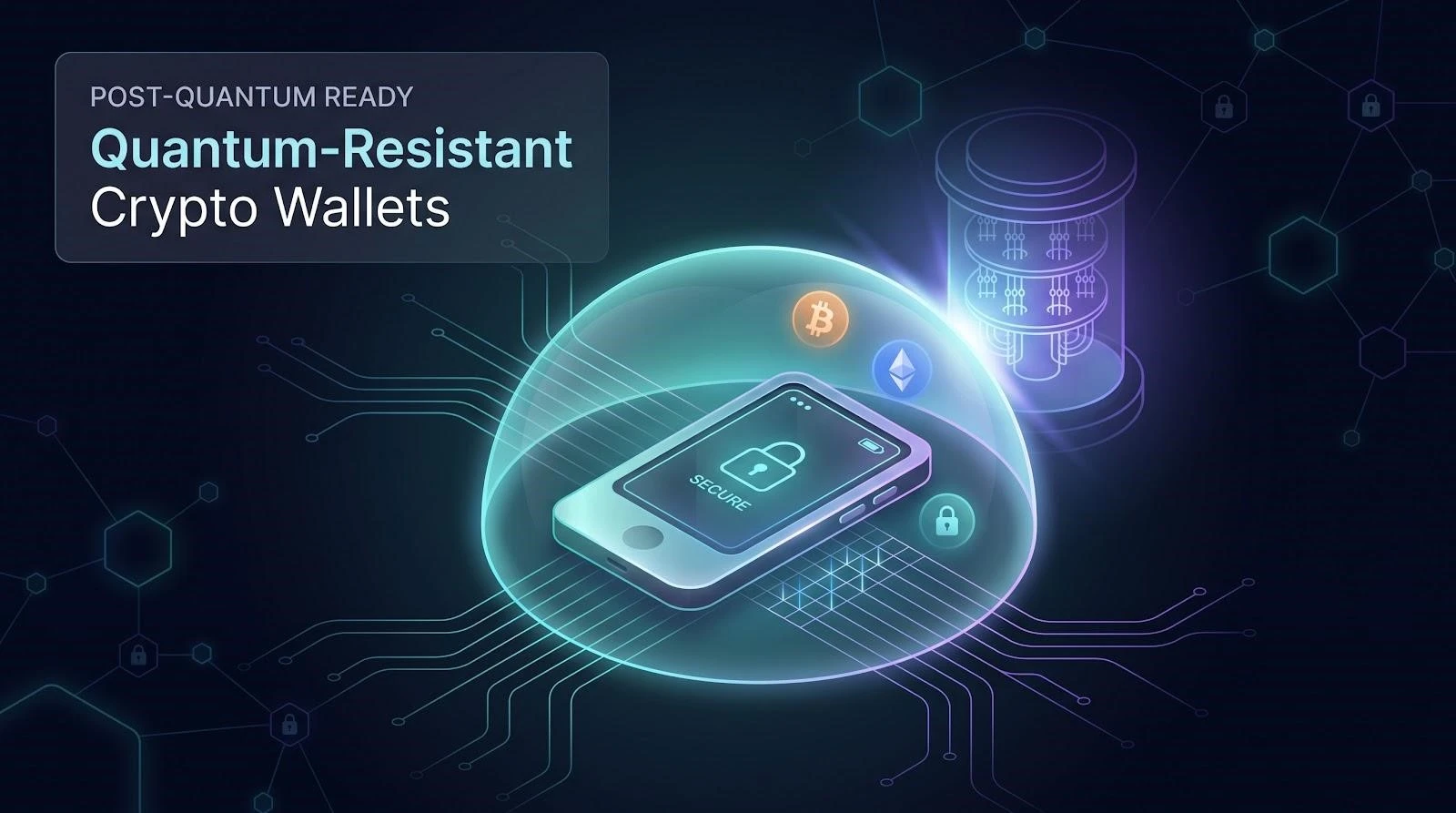
Google’s 2026 research team has moved its post-quantum migration deadline up to 2029, warning that a computer able to crack Bitcoin’s signature scheme could appear before the decade ends. Four years is a sprint in security: Bitcoin and Ethereum upgrade slowly, so waiting on network-level fixes puts long-term holders at risk.
Wallets move faster. A new wave of “quantum-resistant” vaults, hardware devices, and multi-chain apps already weaves post-quantum algorithms into everyday key management. Choosing one now shrinks your attack surface well before quantum machines reach production scale. This guide compares three standout options and shows you how to act.
The quantum threat in plain English
Every blockchain transaction relies on math we once believed was unbreakable. Quantum computers challenge that belief. Shor’s algorithm can pull a private key from its public twin as easily as a magnet lifts pins. Once that happens, a thief could spend your coins before you notice the balance drop.
Google’s 2026 announcement tightened the timeline. Its engineers moved their post-quantum migration deadline to 2029 after new estimates showed fewer qubits are needed to break elliptic-curve cryptography. We have to plan now, not later.
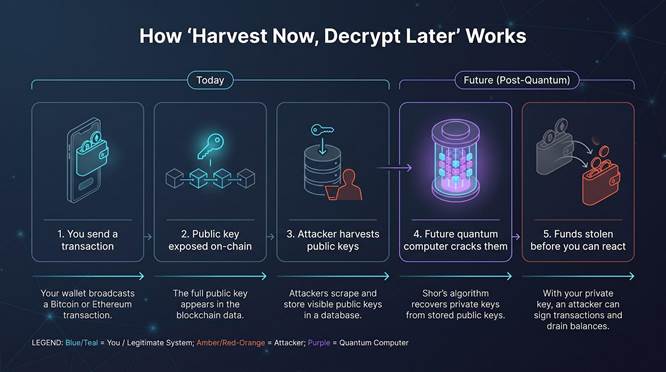
The risk isn’t only future-tense. Attackers can copy on-chain public keys today and decrypt them tomorrow. Each time you send Bitcoin or Ethereum, the public key becomes visible. A patient adversary can store that data, wait for quantum hardware, and recover the matching private key.
Governments feel the pressure too. NIST finalized its post-quantum algorithm portfolio in 2024 and urged industry to migrate well before 2030. Yet core blockchains still run classical cryptography, and protocol upgrades move slowly.
That lag is where proactive wallets help. By hiding your public key until the moment of use or by adding post-quantum algorithms, they buy you time a global network can’t.
What “quantum-resistant wallet” really means
“Quantum-resistant” may sound like a superhero badge, but it’s just a set of concrete design choices. The goal is simple: keep your private key unguessable even if an attacker owns a room-sized quantum computer.
First comes fresh math. Classical wallets rely on elliptic-curve signatures. Quantum-ready versions add or swap in post-quantum algorithms such as Dilithium, Falcon, or Kyber. These schemes stay sturdy against Shor’s algorithm.
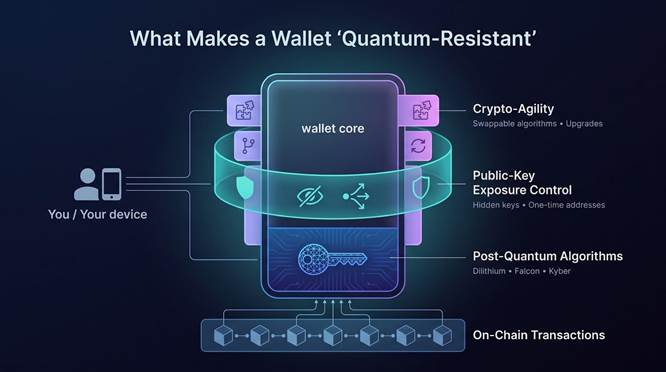
Next is exposure control. A wallet can hide your public key until you spend, or spin up a one-time address each time you receive. No public key on-chain means nothing for an attacker to copy.
Finally, agility matters. Standards will change, so the best wallets treat cryptography like a plug-in. When a new algorithm earns NIST approval, the software slides it in and retires the old one.
Combine those ideas and you get a product that feels familiar on the surface yet quietly rebuilds its foundation.
Our evaluation framework
A parade of wallets now flashes the “quantum-safe” badge, but the label alone says little. We built a yardstick that strips away marketing gloss and highlights real protection.
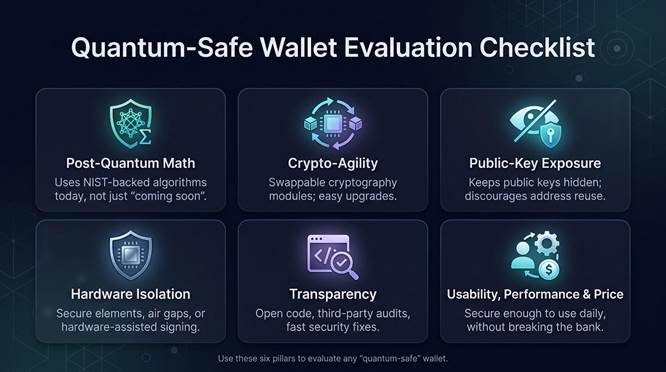
First, we inspect the math. Does the wallet already run NIST-backed algorithms such as Dilithium or Falcon, or is it still riding on legacy curves with a “coming soon” promise?
Second, we look for crypto-agility. Security tools age like produce; the best designs swap cryptographic modules the way you replace a battery.
Third, we follow the public-key breadcrumbs. Good wallets keep your public key out of sight and steer you away from address reuse.
Hardware isolation comes next. A post-quantum signature is useless if malware steals your key before you sign. Secure elements or air-gapped flows score extra credit.
Transparency matters too. Open code, third-party audits, and a track record of quick fixes separate serious builders from vapor-ware vendors.
Finally, we check usability, performance, and price. Quantum safety means nothing if the device gathers dust because it feels like operating a nuclear reactor. We want tools you and I will use.
Wallet review #1: Project Eleven Quantum Vault
Project Eleven treats quantum risk like a locksmith who hides the keyhole. Its Quantum Vault keeps your public key inside an Ethereum smart contract until the moment you spend, so there’s nothing to harvest in advance.
The system leans on account abstraction. Rather than a plain externally owned address, you control a vault contract with its own signing rules. Inside that sandbox, Project Eleven layers post-quantum algorithms and one-time keys, then reveals a single-use signature when you click “Send.” It’s cryptographic peekaboo at production scale.

Project Eleven Quantum Vault official interface screenshot
Transparency backs the promise. The team open-sourced the vault code and companion library, and shipped both to an external audit before launch. The summary showed no critical issues and two minor gas optimizations, both fixed. Seeing Cure53’s report – not just marketing copy – builds trust.
Quantum Vault wins on agility too. Its crypto engine is modular, so when NIST tweaks Dilithium or a chain adopts Falcon, the team can push an upgrade without forcing you to migrate funds.
Day-to-day use feels familiar. Connect MetaMask, fund the vault, choose recovery options, and you’re done. The dashboard lists Bitcoin, Ether, and several EVM tokens together. Withdrawals cost a little more gas than a vanilla transfer because the contract logic runs first, but the difference is cents, not dollars.
Risks mirror other smart contracts: a hidden bug could brick the vault and lock funds. The audit lowers, but doesn’t erase, that possibility. Start small, watch bug-bounty channels, and keep a clean hardware signer handy until Ledger or Trezor support arrives.
Ideal fit: a long-term holder fluent in Ethereum who wants quantum defenses today, not “after Bitcoin hard-forks in 2030.” For that user, Quantum Vault is the sharpest hiding place on the chain.
Wallet review #1: Project Eleven Quantum Vault
Wallet review #2: Trezor Safe 7
Trezor has been the go-to cold-storage brand since the early Bitcoin days, so when it unveiled the Safe 7, the community noticed. The device looks like a sleeker Model T; inside, a new secure element called TROPIC01 verifies firmware updates with post-quantum algorithms. In practice, even a future quantum attacker can’t sneak malicious code onto the hardware.
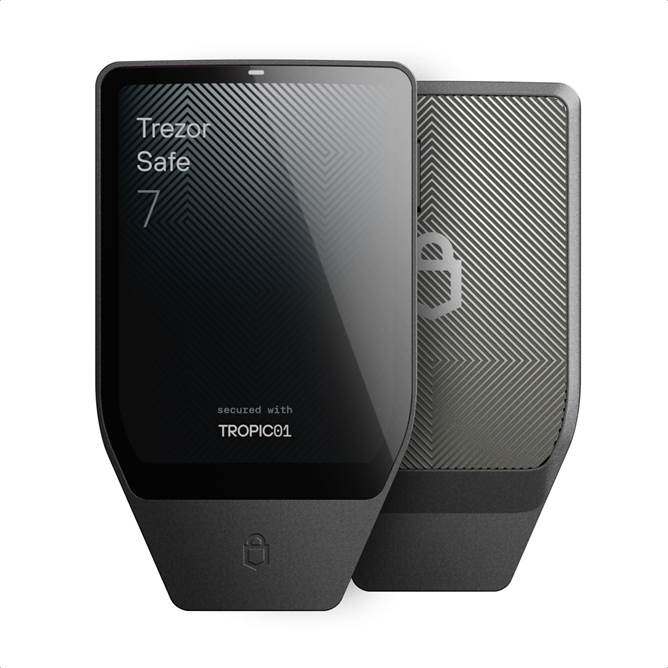
Trezor Safe 7 hardware wallet official product photo
The honeymoon ended when Ledger’s Donjon lab hit TROPIC01 with a precision laser and bypassed its firmware-verification fuse. Because the flaw was physical, a simple software update couldn’t fix it, but Trezor showed the multi-chip design kept funds safe. Tropic Square has already started a new chip batch. That level of transparency suggests Safe 7 will stay battle-ready for a decade-long upgrade cycle.
Everyday use feels familiar. Plug it in, open Trezor Suite, confirm addresses on the bright screen, and park coins offline. The quantum prep runs in the background. Bootloader and firmware updates are signed with SLH-DSA today; when Bitcoin or Ethereum accept post-quantum addresses, a firmware update will add those formats without replacing the device.
Safe 7 also inherits Trezor’s open-source DNA. Anyone can audit the firmware, replicate the build, or compile a fresh binary. Continuous peer review keeps both classical and quantum threats at bay.
No device is perfect. Safe 7 shields keys from malware and supply-chain swaps, yet it can’t stop a quantum thief from forging a transaction once the network itself is vulnerable. You still depend on the chains adding PQ signatures before 2029. The upside: when that day comes, your hardware will already speak the new language.
Ideal buyer: a long-term holder who wants a set-and-forget vault. If you’re moving on from a Model One, Safe 7 delivers the same hands-off experience with an insurance policy baked into the silicon.
Wallet review #3: QSafe Wallet
QSafe takes the opposite route from cold-storage hardware. It’s a browser extension that wraps every secret in post-quantum encryption, then gives you a familiar multi-chain interface – think Trust Wallet with a Kevlar lining.
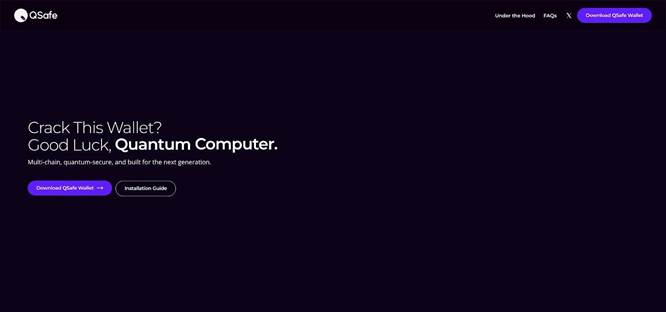
QSafe Wallet browser extension UI and homepage screenshot
The first defense is Kyber-based key encapsulation. When you back up your seed, the app encrypts it with a lattice algorithm rather than old-school AES. Even if someone grabs the encrypted file and waits for 2029, the math still holds.
Next comes Quantum-Safe MultiSig. Teams or families can create multi-signature wallets that are post-quantum from the ground up. Each approval needs an independent SLH-DSA signature on-chain, so no single point of failure exists.
Performance feels quick. Signing an Ethereum test transaction in a desktop browser takes milliseconds, so the heavier crypto stays invisible. You see balances, tap Send, confirm, and you’re done.
Because QSafe is pure software, it inherits hot-wallet risks. Malware on your laptop could copy a decrypted seed during runtime. Serious holders might pair QSafe with a clean, dedicated device or wait for the team’s planned hardware accessory.
Accessibility is its edge. The download is free, the learning curve shallow, and supported assets already include Bitcoin, Ethereum, Polygon, and Solana. For daily DeFi use or mid-size portfolios, QSafe offers an easy leap into the quantum-safe world.
How the three wallets stack up
We’ve covered a vault, a hardware device, and a software app. Each tackles the quantum puzzle from a different angle, so the next step is to place them side by side.
| Feature | Quantum Vault | Trezor Safe 7 | QSafe Wallet |
| Form factor | Smart-contract vault | Hardware wallet | Browser extension |
| Post-quantum math today | Dilithium / Falcon layer | SLH-DSA-signed firmware | Kyber-encrypted backups |
| Key exposure on-chain | Hidden until spend | Standard until protocol upgrade | Standard on legacy chains, PQ on native |
| Hardware isolation | Optional (pair with signer) | Built-in secure element | None (hot wallet) |
| Open source & audits | Contract code + audit | Full firmware, public | Core libraries public |
| Cost | Gas fees only | ≈ $250 device | Free download |
| Best for | DeFi-savvy long-term holders | Cold-storage purists | Everyday multi-chain users |
No single column wins every row, and that’s the point. Security is contextual. If you plan to park Bitcoin for a decade, Safe 7’s cold isolation makes sense. Active Ethereum user? The Vault’s key-hiding trick is priceless. Managing smaller balances across chains? QSafe offers seamless upgrades without extra hardware.
Conclusion
The common thread is preparedness. Project Eleven’s Quantum Vault hides your public key until you spend, the Trezor Safe 7 signs its firmware with post-quantum algorithms inside a secure element, and QSafe Wallet wraps your backups in lattice-based encryption for everyday multi-chain use. None of them waits for Bitcoin or Ethereum to hard-fork. Match the tool to how you actually hold your coins, move a small test balance today, and you will already be several steps ahead when quantum hardware reaches prime time in 2029.