


































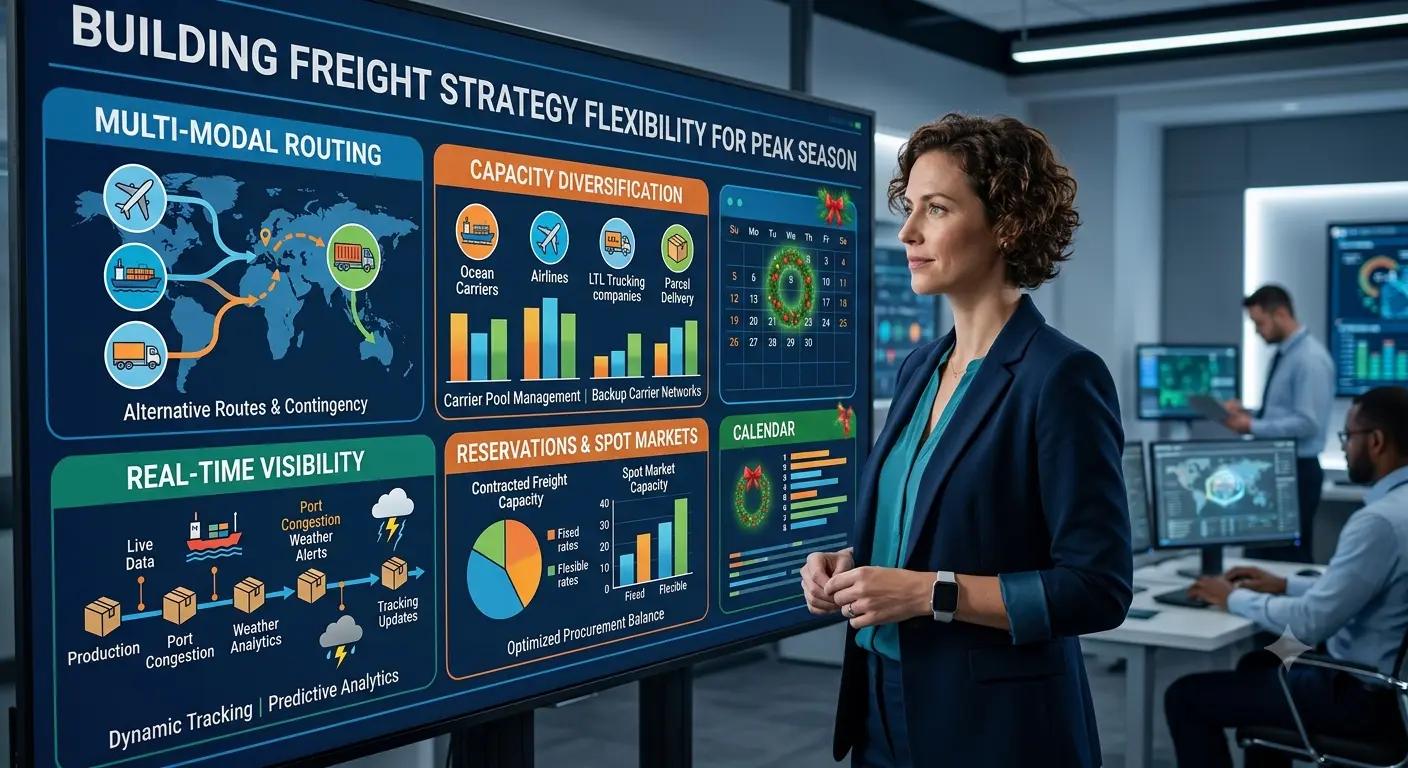
The busiest shipping season of the year is quickly approaching and it tends to penalize companies that place their trust solely in one mode of transportation. Truck capacity continues to be tight, drivers are elusive, and rates surge during a capacity crunch. Consequently, truck-only freight tactics become obsolete and turn into a roll of the dice.
However, the solution is not merely reserving capacity ahead of time – but rather diversifying your freight among modes to ensure that one upset doesn’t result in failed deliveries.
Why Truck-Only Strategies Crack Under Peak Pressure
Most peak seasons are much the same. Volumes rise, capacity tightens, and carriers put on surcharges that could go any which way for any reason. If you haven’t secured space, you book whatever the daily rate is on the spot market – and it’s often not pretty. Driver shortages exacerbate the issue, coming as they do from the same inadequate labor pool in any given month, only spread thinner when everybody is competing for trucks at the same time.
This isn’t exactly a trucking problem though. It’s a consolidation problem. If all of your freight eggs are in the over-the-road basket, then you’re at the mercy of whatever the market will bear for those six or eight weeks. A more resilient approach is to diversify away from that one point of failure. And that underlies effective disaster proofing – not just doing what you were doing a bit earlier than you did it last year.
Mode Diversification Is The Real Flexibility Lever
One of the most underutilized strategies during peak season is adding a new mode of transport: freight rail. Trucking is ideal for short-haul, time-sensitive freight, but with road and driver capacity growing increasingly constrained, it’s time to get long-haul capacity where it’s better used, on the railroad.
You aren’t sacrificing your truck capacity; you’re diversifying your modes and creating real relief by integrating rail logistics into your freight portfolio and taking long-haul capacity pressure off the trucking network. Especially during peak, when everyone else is trying to access the same over-the-road capacity at the same time, this could be the game-changer you need. Plus, there’s a natural alignment: Just when you need to get that long-haul freight moving, drivers are gravitating toward the loads they can turn more quickly.
Also, fuel and equipment utilization come into play – freight rail is, on average, three to four times more fuel-efficient than trucks. Intermodal trains can carry the freight of roughly 280 trucks, reports the Association of American Railroads. That’s 280 fewer drivers you need to worry about finding, booking, and paying for – and maybe even more, if you’re looking at less-than-truckload solutions.
Lock In Rail Capacity Before Peak Hits
If you’re booking last-minute during peak season, rail capacity is just as tight and competitive as truck capacity – there’s no shortcut there. The edge comes from reliability, and you get that by locking in annual or seasonal contracts well ahead of time. Shippers who nail down rates and volumes with their rail providers months before peak don’t get caught off guard when prices spike. You already know your costs, and your capacity is already spoken for.
That takes discipline, though. You have to forecast your volumes by lane and actually commit to them with your carrier. This isn’t a spot-market quick fix – it’s a mid- to long-term play. But when peak season chaos kicks in, you’re not scrambling. You’ve got a seat at the table and one less thing to worry about. And carriers notice which shippers show up reliably, year after year – that reputation pays off too.
Build Realistic Transit Buffers Into Your Planning
Rail isn’t a one-to-one swap for trucking, and it’ll bite you if you treat it that way. Yes, it takes longer. But once you build that extra time into your planning, rail actually runs pretty predictably on long-haul routes. The real work is on your end: padding your inventory lead times and keeping a close eye on dwell time at the rail terminals.
Dwell time is easy to underestimate. Let a container sit too long at the terminal and you’re racking up demurrage fees while the whole cycle slows down – which kills the cost savings you switched to rail for in the first place. And drayage (the short truck haul from the rail ramp to your warehouse) is usually the make-or-break piece. If that last leg isn’t dialed in, all the efficiency you gained from rail just evaporates.
Use Visibility Tools To Catch Problems Early
Despite contracts and buffers, exceptions break through. Use a freight visibility platform or TMS to track rail shipments in transit and catch delays before they blow up into service failures. When a rail shipment is running behind, and a customer commitment is at risk, being able to see that and immediately reroute that specific load back to truck instead of after it’s too late is what separates a flexible freight strategy from one that is only conceptually flexible.
A 3PL or logistics partner can help here, especially one with existing rail relationships, and enough pooled volume to access capacity a single shipper couldn’t negotiate directly.
Every peak season pinches capacity and inflates rates. The survivors who limp through with the least damage aren’t the ones who booked early, they’re the ones who spread their risk across modes long before the pressure started.