





Ransomware has shifted from office files to factory floors.
In 2023, industrial companies endured 1,484 attacks—32 percent of all known ransomware incidents worldwide, according to NCC Group.
Dragos counted 605 OT-specific strikes in 2022—an 87 percent jump year over year—and warns the curve is still climbing.
When seconds of downtime can burn six-figure sums or trigger safety shutdowns, you need responders who speak ladder logic, not just Windows logs. This guide ranks seven OT incident-response firms we trust to land fast, contain chaos, and restart production safely—so you can pick your cavalry before the next alarm.
How we picked the “Magnificent Seven” incident-response partners
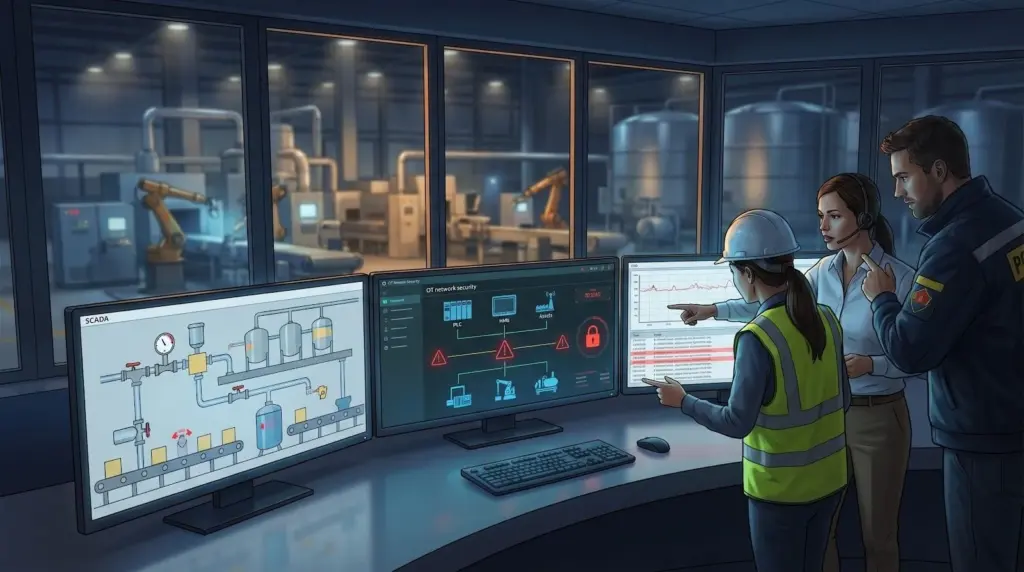
Glossy brochures do not keep furnaces lit; proven field chops do. So we built a scoring model that mirrors what plant managers care about when the alarms blare.
First, we ruled out generalist consultancies. To stay in the running, a firm had to staff dedicated OT responders, run a 24 × 7 hotline, and commit, by contract, to arrive on site within a defined service-level agreement.
Sygnia’s Incident Response Retainer publishes those numbers: its 2025 service brief sets a two-hour remote-response SLA and a 24-hour en-route arrival for the Premium tier.
Even the entry package caps remote triage at four hours and boots-on-the-ground within 48, giving plant managers a clear stopwatch to hold the vendor to.
That transparency became our benchmark when scoring every finalist on SLA firmness.
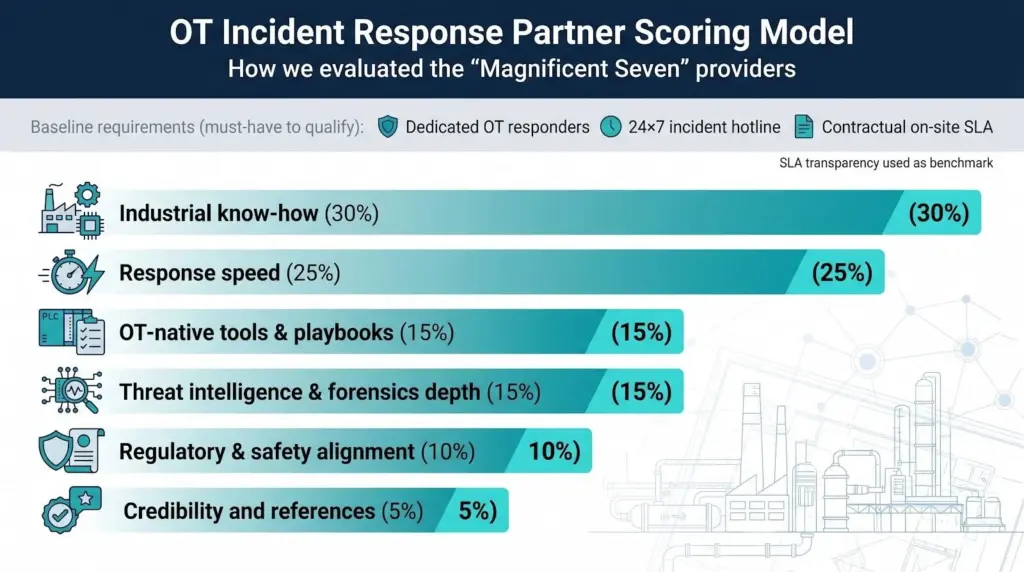
We then graded the finalists on six weighted factors:
- Industrial know-how (30 percent). Does the team speak Modbus, DNP3, and process-safety language? As the SANS Institute notes in its ICS/OT safety fundamentals blog, a cyber incident in OT is “a physical event with potential consequences that include operational disruption, environmental impact, and loss of life.”
- Response speed (25 percent). Minutes, not days, decide whether downtime becomes a footnote or a front-page story.
- OT-native tools and playbooks (15 percent). Safe containment requires runbooks built for PLCs, historians, and segmented networks, not just Windows re-images.
- Threat intelligence and forensics depth (15 percent). Leaders already track ICS-specific malware and can extract controller firmware without bricking hardware.
- Regulatory and safety alignment (10 percent). Bonus points for teams that can draft a NIS2 notification or TSA 12-hour report while working with process-safety engineers.
- Credibility and references (5 percent). Analyst rankings, public case studies, and peer testimonials close the gap between marketing claims and real-world performance.
After scoring and several tie-break discussions, seven providers consistently cleared our high bar. The next section lays them out side by side so you can benchmark which one best matches your risk profile.
At a glance: how the seven providers stack up
| Rank | Provider | Founded / HQ | Global reach | Primary OT sectors | On-site SLA† | Distinguishing edge |
| 1 | Sygnia | 2015 / Tel Aviv | Americas, EMEA, APAC | Manufacturing, energy, pharma | 24 h | “Cyber-SWAT” team; metrics-driven playbooks |
| 2 | Dragos | 2016 / USA | Global field force | Power, oil & gas, water | <4 h (retainer) | 100 percent ICS focus; leading threat intelligence |
| 3 | Mandiant | 2004 / USA | 60+ countries | Cross-sector IT–OT | 24 h | Deep forensics backed by Google Cloud analytics |
| 4 | CrowdStrike Services | 2011 / USA | 50+ countries | Manufacturing, pharma | Remote minutes / on-site 24 h | Falcon telemetry for near-instant endpoint visibility |
| 5 | IBM X-Force | 1996 / USA | 150+ countries | Utilities, transport | 24 h | Large bench for multi-site IT–OT convergence cases |
| 6 | Accenture Security | 1989 / Ireland | 50+ countries | Oil & gas, chemicals | 24 h | Combines industrial consulting with crisis-comms skill |
| 7 | Honeywell Cybersecurity | 1906 / USA | 40+ countries | Refining, building automation | 24 h | OEM insight into control hardware and recovery |
†SLA figures are drawn from publicly stated retainer terms or case-study disclosures; actual arrival times depend on contract tier and site location.
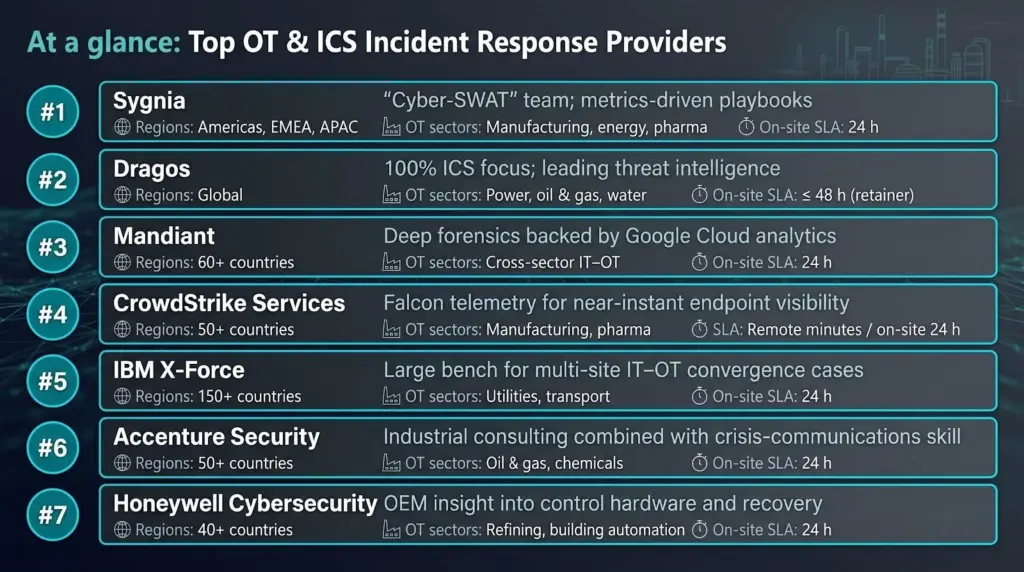
Need boots on the ground in under four hours? Dragos leads that metric. Prefer an OEM that built half your control room? Honeywell is the practical fit. The next section explains why each score landed where it did, and where trade-offs appear when the fine print meets real-world pressure.
1. Sygnia: your cyber “SWAT team” for OT crises
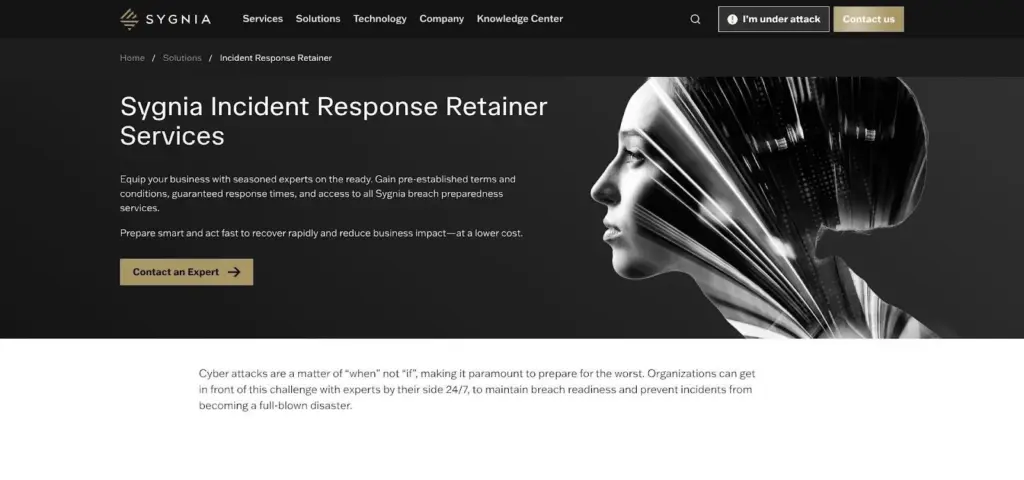
Sygnia OT incident response retainer service webpage screenshot
Born in Israel’s offense-grade cyber community, Sygnia now supports clients on six continents and appears as a Representative Vendor in the 2026 Gartner® Market Guide for Cybersecurity Incident Response Retainer Services.
When ransomware locks a packaging line at 3 am, Sygnia spins up a remote war room in minutes and dispatches responders under a 24-hour SLA. The same engineers who brief your board also walk control staff through safe containment, line by line, delivering what clients call “command-and-control clarity” in the first hour.
Why it stands out
- Battle-tested OT talent. Teams have reversed PLC malware and rebuilt historian databases without halting production.
- Metrics-driven playbooks. Sygnia’s 2026 board briefing highlights six performance signals: segmented Mean Time to Contain, IR Plan Activation Rate, Escalation Latency, Retainer Utilization, Post-Incident Policy Update Rate, and Framework Maturity Score, and bakes them into every engagement. Those incident response metrics sit beside traditional recovery-time-objective figures so plant managers and directors judge success on evidence, not gut feel.
- Post-incident hardening. Engagements finish with segmentation fixes, OT detection tuning, and tabletop drills so the next alarm feels routine.
Best fit: high-stakes manufacturers, energy operators, and pharma plants that refuse to gamble with safety, compliance, or uptime.
2. Dragos: industrial cybersecurity’s resident brain trust
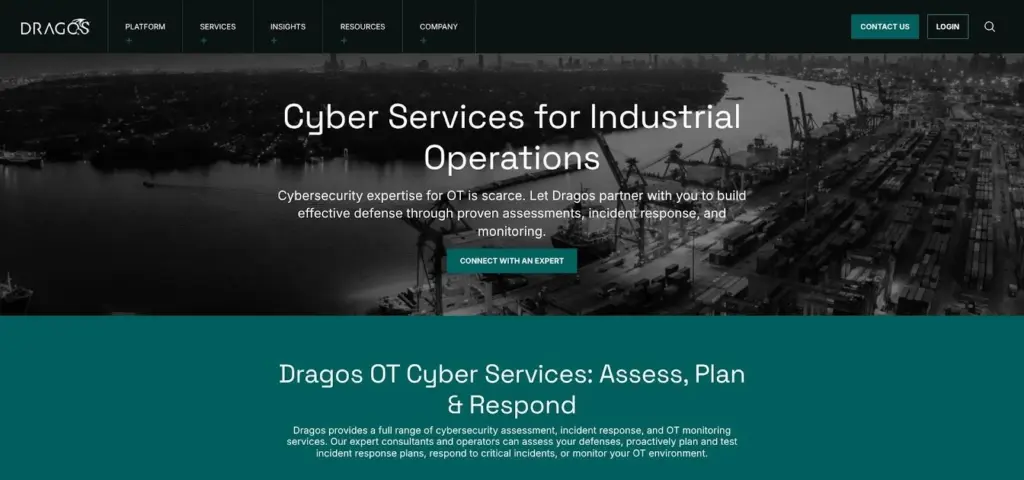
Dragos OT cyber services and incident response webpage screenshot
If Sygnia is the strike team, Dragos is the field manual that arrives in steel-toed boots. Founded by veterans who once defended the U.S. power grid, Dragos focuses entirely on operational technology.
What sets it apart
- Deep visibility in minutes. According to Dragos internal benchmarks, deploying the Dragos Platform on a SPAN port auto-discovers every PLC and HMI—often in under 15 minutes—giving responders a live asset inventory before containment begins.
- Rich threat intelligence. Dragos analysts were first to expose the CHERNOVITE threat group and its PIPEDREAM malware framework in April 2022, alerting the community to the seventh known ICS-specific malware family.
- Retainer-backed speed. The company states that Rapid Response Retainer customers receive first contact in 1 hour and remote analysis within 2–4 hours; on-site arrival is guaranteed within 48 hours if needed.
- Cradle-to-recovery approach. After containment, engineers validate controller firmware, stage safe restarts, and help draft regulator reports, turning a potential headline into a footnote.
Best fit: owners of power, oil & gas, water, or chemical assets who want strong OT threat insight plus a platform that cuts through protocol noise.
3. Mandiant: battle-tested forensics at global scale
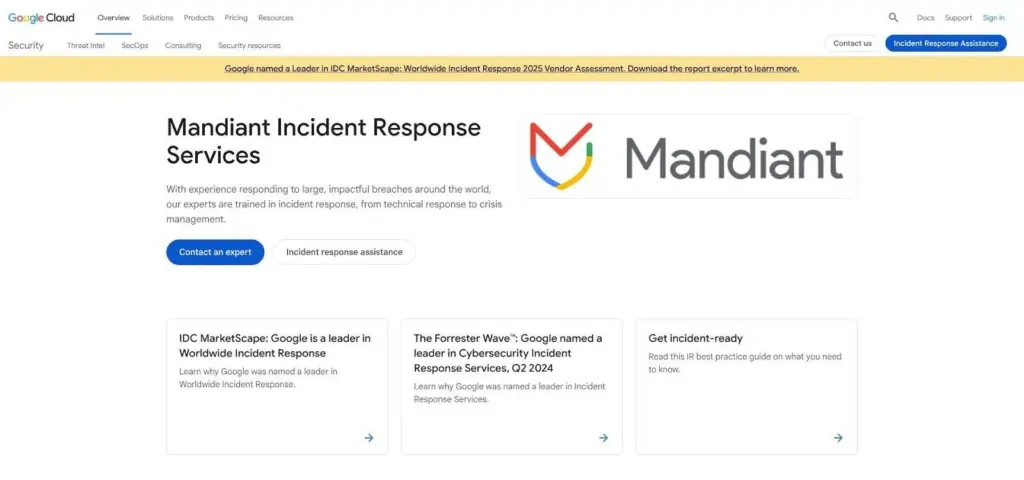
Mandiant incident response services with Google Cloud webpage screenshot
Mandiant, now part of Google Cloud, has investigated headline breaches for more than 20 years and appears as a Representative Vendor in the 2025 Gartner® Market Guide for Digital Forensics and Incident Response Retainer Services. Chronicle SIEM lets responders sift petabytes of log data in minutes; Google Security Operations documentation shows raw-log searches spanning 24 hours are auto-chunked into 10-minute bars for rapid pivots.
Why it stands out
- One playbook, many theaters. In a 2025 engagement Mandiant coordinated parallel intrusions across a U.S. data center, a European bottling plant, and a cloud SCADA portal, proving that global IT–OT convergence does not have to mean fragmented response.
- OT linguists on call. Former utility engineers on staff speak PCD and DNP3 and can conference Siemens or Schneider support mid-crisis, bridging boardroom briefings and plant-floor realities.
- Google Cloud horsepower. Chronicle’s petabyte search and BigQuery integration shrink log timelines from hours to single-digit minutes, freeing investigators to focus on historian images and controller forensics.
Best fit: diversified manufacturers and energy majors that need one partner to herd stakeholders across borders, hit regulator clocks, and tame both large-scale IT and sprawling plants.
4. CrowdStrike Services: speed fueled by Falcon telemetry
When malware pivots from finance servers to an engineering workstation, every minute counts. CrowdStrike shortens that window because many plants already run the lightweight Falcon agent. Responders can trigger Real Time Response and start pulling forensic data in under 15 minutes, no hardware imagers required.
That immediacy enables containment: analysts isolate compromised HMIs, push remediation scripts, and verify clean baselines while production keeps rolling. For deep-protocol forensics, CrowdStrike taps OT partners such as Dragos, an integration that feeds Falcon endpoint data into the Dragos OT threat-detection app.
Threat intelligence adds a second edge. The company tracks e-crime crews like Wizard Spider and LockBit and injects those IOCs directly into live hunts, letting responders predict the next move instead of reacting.
Best fit: plants already inside the Falcon ecosystem or any site that values sub-hour containment over custom controller analysis. If your floor runs Windows-based HMIs and thin clients, the same agent guarding payroll servers also buys you those crucial first minutes when OT trouble starts.
5. IBM Security X-Force: global reach for converged IT–OT incidents
IBM Security X-Force operates in 170 countries, the broadest footprint of any provider on this list. That scale lets IBM drop a malware analyst at your Brazilian refinery while a business-continuity lead briefs executives in Houston the same morning.
Many plants already feed logs into IBM QRadar; when trouble flares, X-Force pivots that SIEM to hunt rogue credentials, suspicious historian queries, or OT-protocol anomalies—no forklift upgrade required.
Hybrid crises are X-Force’s specialty. Ransomware that detonates in Active Directory and slides into a PLC network meets one converged team, so containment decisions respect both cyber and process-safety constraints.
Regulated operators rely on IBM’s paperwork discipline: responders draft NERC CIP or TSA Pipeline reports alongside technical work, sparing CISOs the midnight legal checks.
Choose IBM when your footprint is vast, your stack already carries Big Blue logos, and the board wants one partner accountable across continents and control rooms alike.
6. Accenture Security: industrial depth with boardroom polish
Accenture strengthened its OT muscle by acquiring Revolutionary Security in 2020. The deal fused control-system engineers with cyber specialists, creating teams that read P&ID diagrams as fluently as MITRE ATT&CK.
During a breach, Accenture fields a dual-track crew: responders contain malware at the plant while crisis-management advisors prep executives for earnings calls and regulator briefings. Fortune 500 boards appreciate the single-vendor simplicity.
Clients also tap Accenture’s global labs. Infected PLCs can be shipped overnight to a hardware sandbox where analysts detonate malware, test patches, and script recovery steps before touching live equipment—a cushion few rivals offer.
When incidents demand niche controller forensics, Accenture brings in third-party OEM experts yet remains accountable for the full engagement. The outcome blends industrial know-how, regulatory skill, and a large consultant bench ready to turn lessons into lasting improvements.
Best fit: cyber crises intersecting with massive capital projects such as LNG export terminals, chemical supersites, or smart-factory rollouts where boardroom polish matters as much as plant-floor grit.
7. Honeywell Cybersecurity: OEM insight for hardware-level recovery
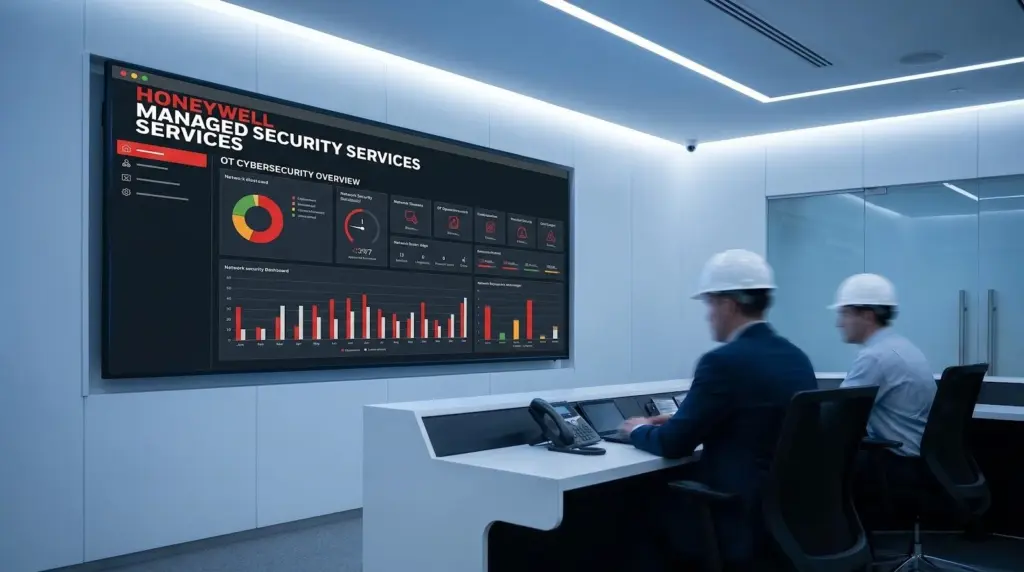
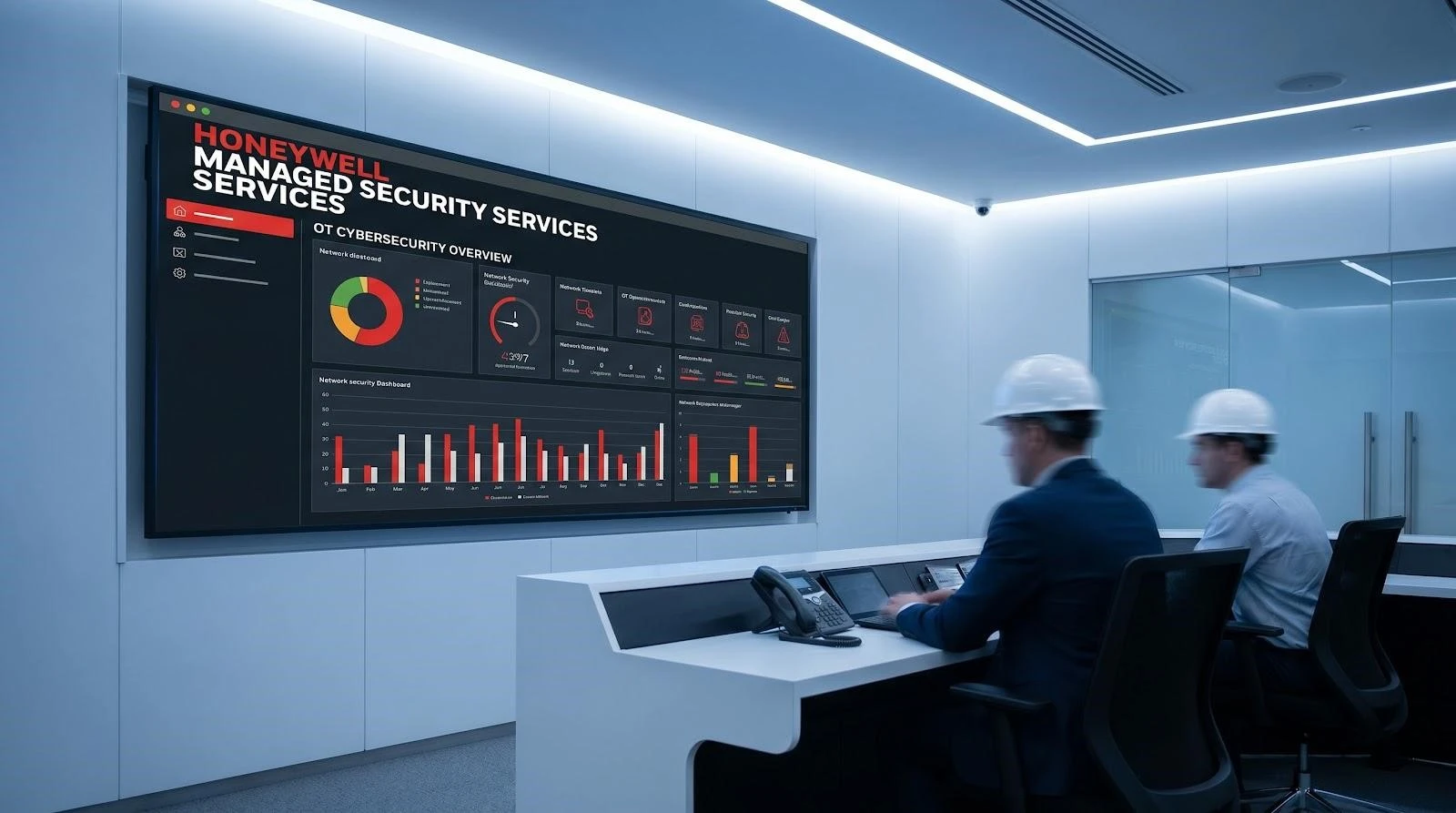
Honeywell OT cybersecurity AMIR managed security services webpage screenshot
Few rivals can claim 100 years of control-system engineering. Honeywell’s cybersecurity arm taps that lineage: when ransomware cripples an Experion DCS, responders bring in the same engineers who wrote the firmware.
Service model
- 24 × 7 OT SOC and AMIR. Honeywell’s Advanced Monitoring & Incident Response service delivers continuous threat detection and rapid response for industrial clients.
- First-party field service. Technicians arrive with flash tools, clean firmware images, and OEM-certified spares, verifying logic integrity and guiding operators through safe restarts.
- Vendor-neutral integrations. The OT SOC connects with platforms like Nozomi and Claroty, while Honeywell’s deep knowledge of Experion gear shortens diagnosis and recovery time.
Choose Honeywell when your environment relies on its control products or when you need a partner that can both remove malware and provide certified replacement hardware before the next shift begins.
Frequently asked questions about OT incident response
What makes OT incident response different from IT response?
Cutting power to a server usually ends an IT breach; doing that in a refinery can trigger chemical reactions or safety shutdowns. Effective OT playbooks pair cybersecurity analysts with control engineers from the first call.
When should we involve an external IR firm?
Engage the moment a breach could touch control systems. Early help stops well-meaning IT staff from blanket-isolating networks in ways that stall production. Most critical operators keep a retainer so specialists can join within minutes, not hours.
How fast can a top-tier provider get on site?
- Dragos Rapid Response Retainer: first contact in 1 hour, remote analysis within 2–4 hours, on-site arrival ≤ 48 hours
- Sygnia IR Retainer: 24-hour global dispatch per its service datasheet
- IBM X-Force: active in 170 countries and can deploy local responders the same day for most sites
Will our regulator deadlines be covered?
Yes. Firms that routinely file TSA Pipeline (12-hour), NERC CIP-008 (1-hour), and NIS2 (24-/72-hour) reports build those clocks into their workflows. Ask to see sample templates during vendor selection.
What does a good OT IR retainer include?
24 × 7 hotline, guaranteed response hours, on-site SLA, and an onboarding phase mapping critical assets and secure-file-exchange paths. Leading vendors also run tabletop drills so engineers and responders meet long before real sirens sound.
Conclusion
Selecting an OT incident-response partner before an attack strikes can mean the difference between a brief disruption and a multi-week shutdown. The seven providers profiled here cover a spectrum of capabilities, geographic reach, and sector expertise, giving critical-infrastructure operators a head start in building resilience.